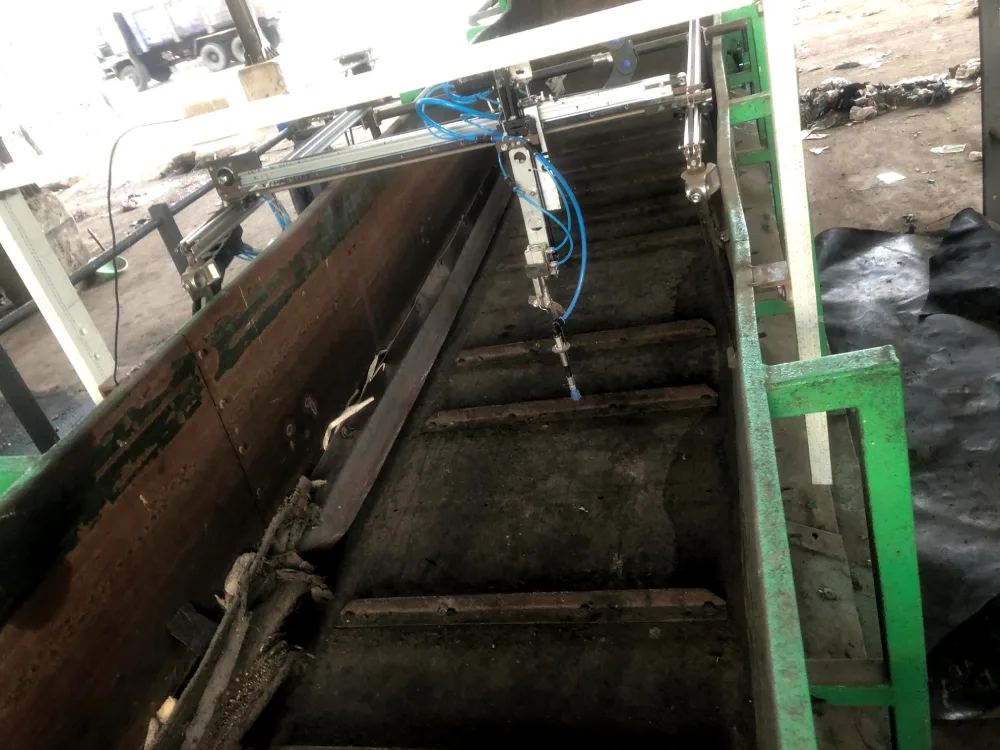
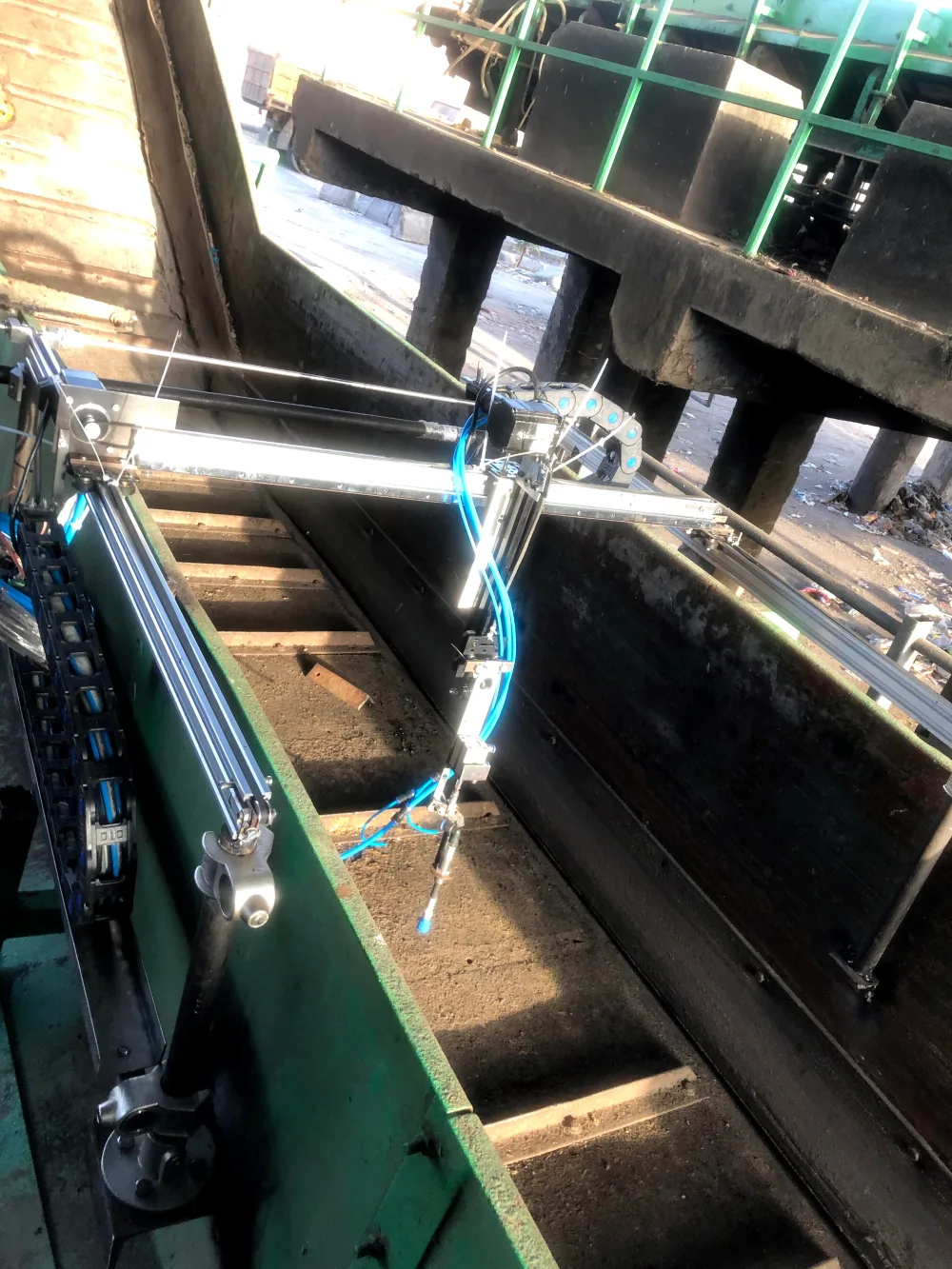
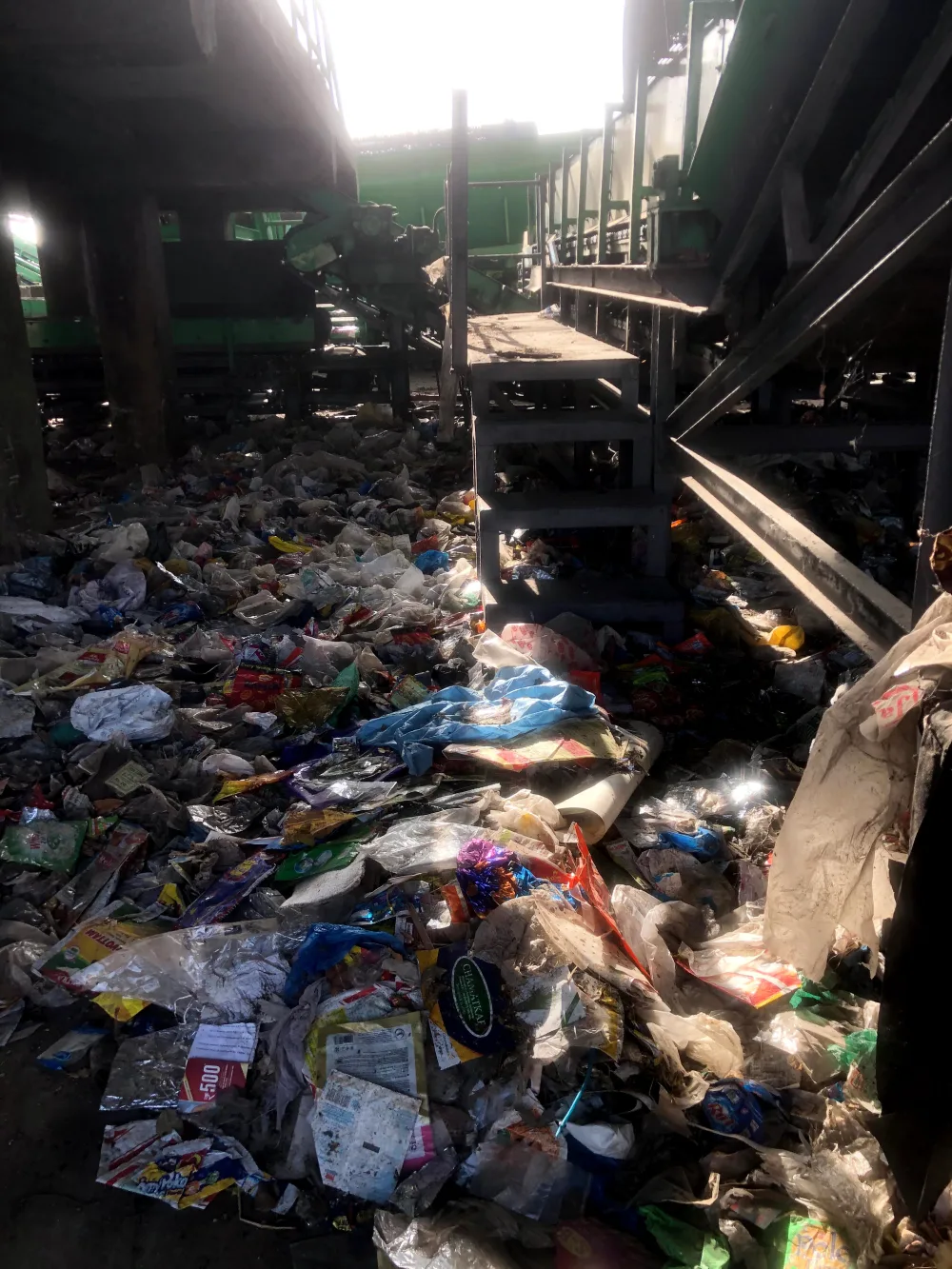
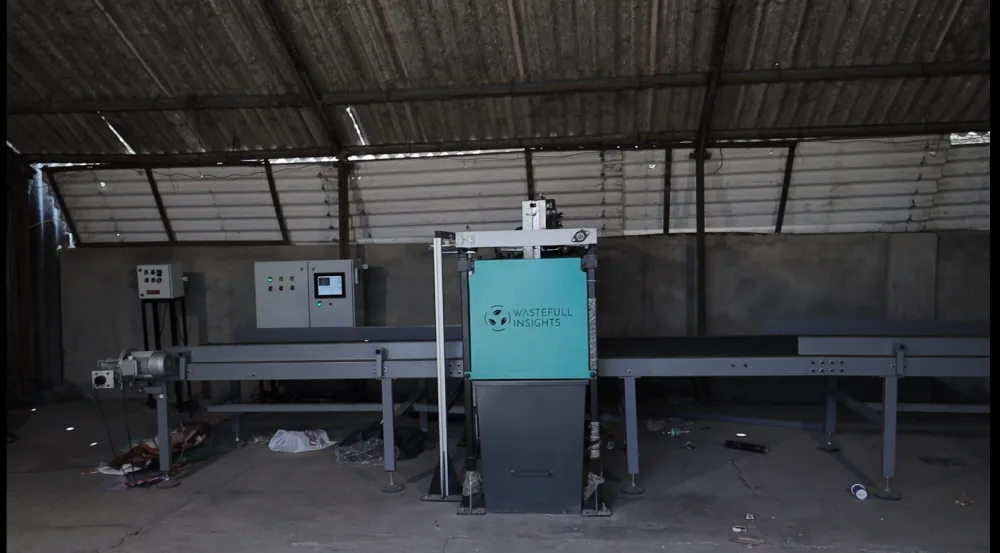
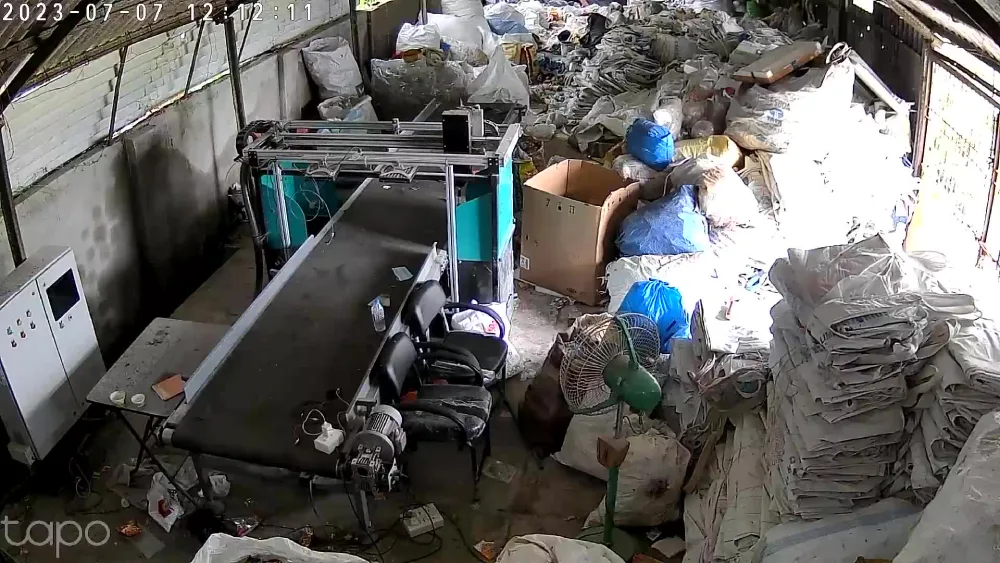
No fancy lab. No angelic lighting. Just piles of waste, a stubborn idea, and a team trying to make robots do what even humans didn’t want to.
The First Spark
Ramky Enviro
Before all else, Ramky Enviro gave us our first sandbox a real-time R&D environment that let us fail, rebuild, and learn fast.
Ramky gave us a place to fail gloriously.
An R&D floor full of chaos, cables, and optimism.
A place where suction cups fell off, encoders cried, and vision models hallucinated.
But this was where we built our backbone testing, failing, rebooting, repeating.
The Great Sorting Show
Vadodara Railway Colony
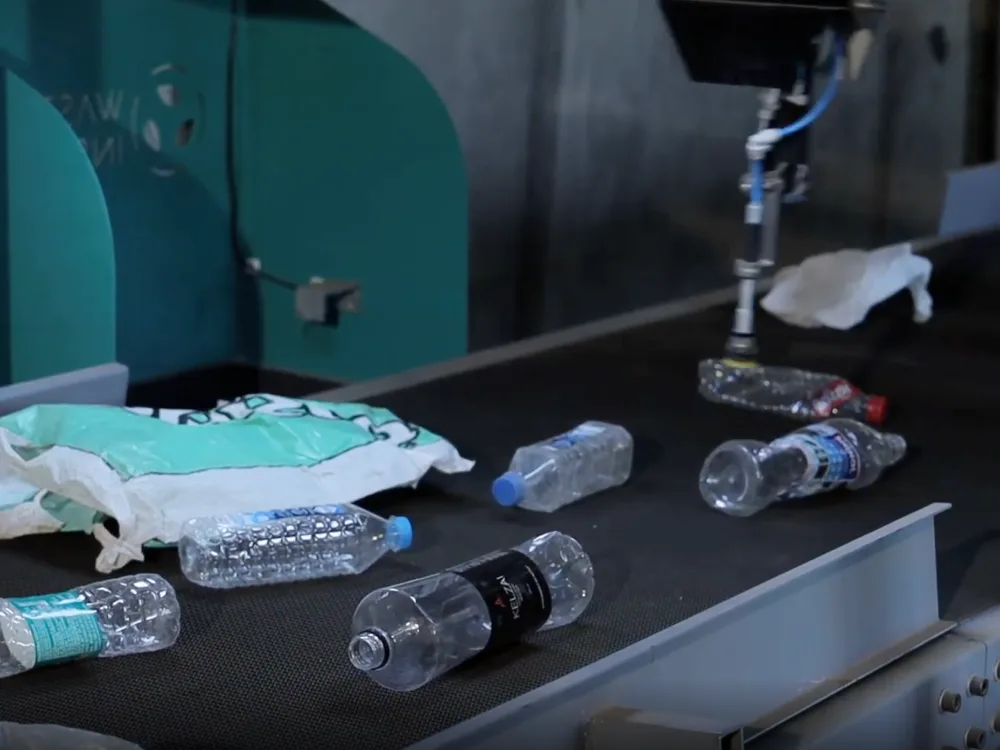
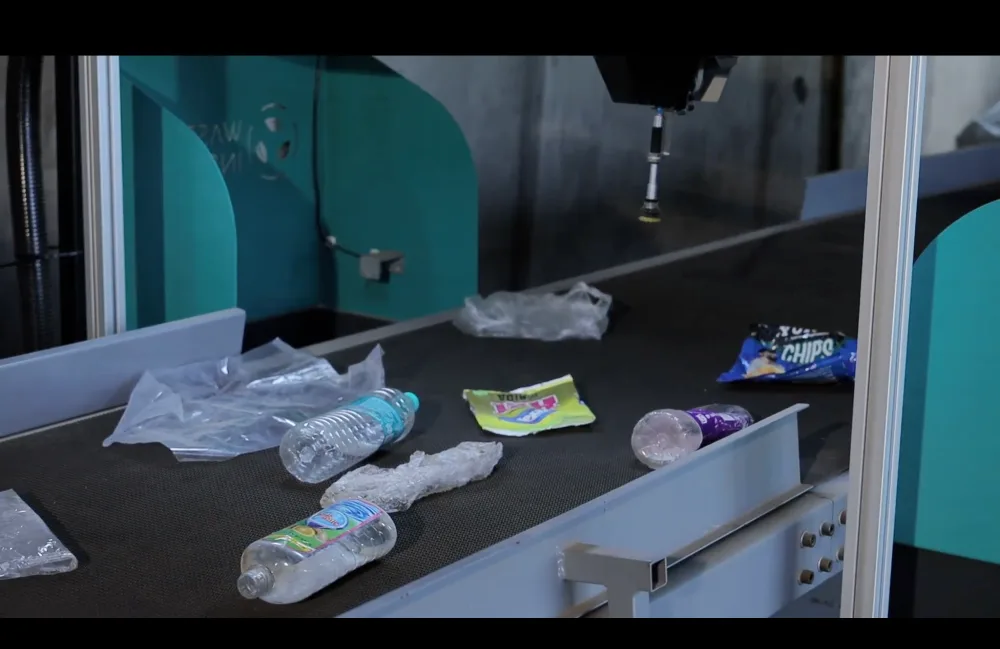
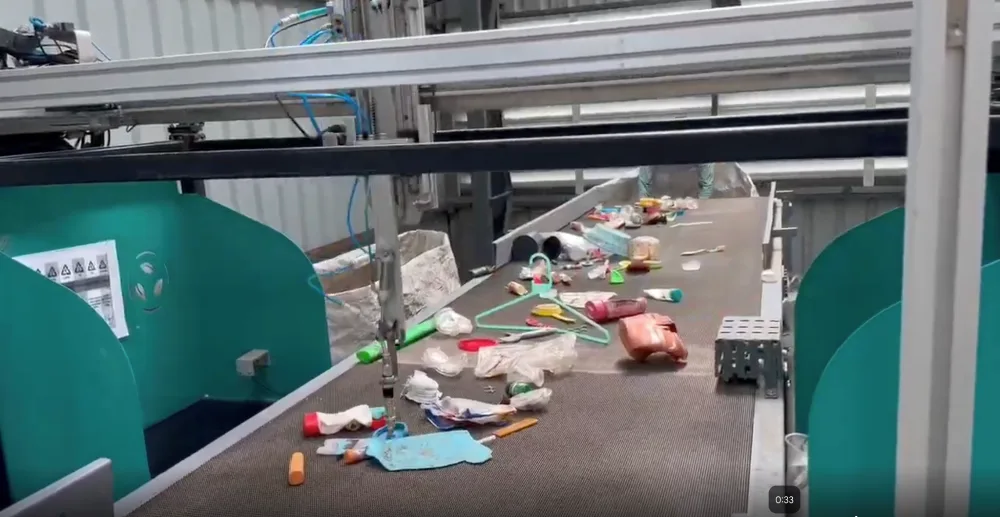
Our first robot met the wild west of mixed waste. PET, HD, MLP, PP, HMLD you name it, it was flying past at 2 seconds a pick. We hit 50–60 kg/hour, broke a few suction cups, and discovered vibrations have personalities too. Project ended when the tender did but we walked away with a priceless lesson: If your robot can survive Indian waste, it can survive anything.
Sorting Plastic, Learning Humanity
Lucro Plastecycle
Picture this: recyclers hand-sorting dirty, sharp plastic all day. We brought in a robot that could separate LD, PP, and HD rigids and learned automation isn’t just efficiency, it’s empathy. We failed fast, learned faster, and realized machines shouldn’t replace people they should make the hard jobs a little less hard.
How It Works
A Simple Process For All Your Waste Management Needs
Delivering smart waste solutions for homes, businesses & industries to keeping communities clean and protecting the environment every day.
What We Learned
Robots don’t replace people. They just save them from the boring, the dangerous, and the downright gross.
Every mess we made taught us how to make machines that actually make sense in the real world.
We’re not building robots to take jobs we’re building them to make work cleaner, safer, and more meaningful.
Each pilot showed us that waste sorting isn’t just an engineering challenge it’s a human one.
What We Learned
Robots don’t replace people. They just save them from the boring, the dangerous, and the downright gross.
Every mess we made taught us how to make machines that actually make sense in the real world.
We’re not building robots to take jobs we’re building them to make work cleaner, safer, and more meaningful.
Each pilot showed us that waste sorting isn’t just an engineering challenge it’s a human one.